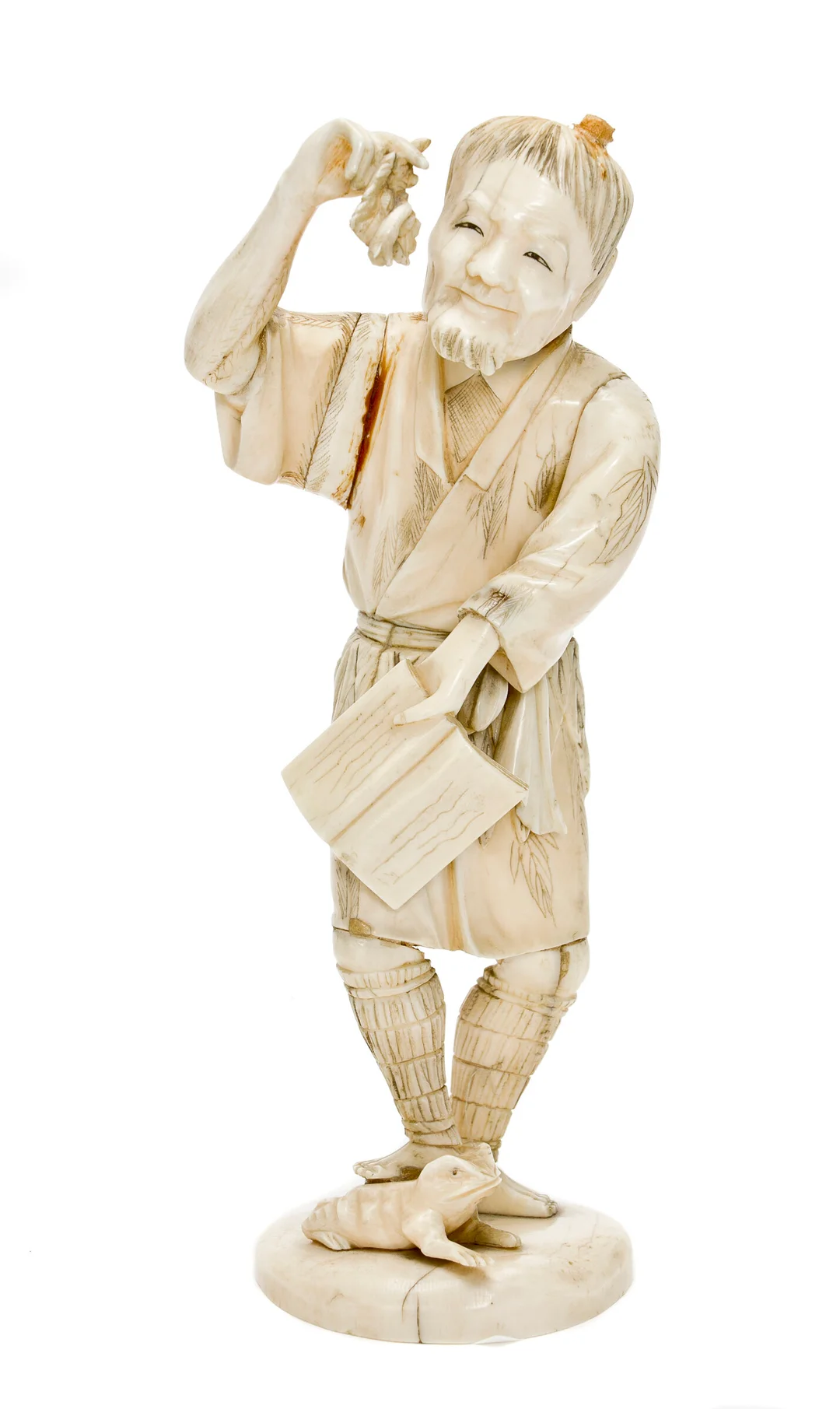
Okimono — Okimono
900 NOK i originalvaluta · Klubbat pris — auktionshuset publicerar ingen budhistorik.
Beskrivning & detaljer
og t blad med en snegl i den andre. Signert under. Meji, ca. 1900. Japan. Figur i skåret ben. Motiv av eldre mann med bok i den ene hånden, Okimono (Japanese: ??; literally: "put thing") is a Japanese term meaning "ornament for display; objet d'art; decorative object", typically displayed in a tokonoma "alcove" or butsudan "Buddhist altar". The Japanese word okimono compounds oku "put; place; set; lay out; assign; station; leave" and mono "thing; object; article". The Oxford English Dictionary defines the loanword okimono, "A standing ornament or figure, esp. one put in a guest room of a house", and records the first usage in 1886 by William Anderson. An okimono may be a small Japanese carving, similar to, but larger than netsuke. Unlike netsuke, which had a specific purpose, okimono were purely decorative and were displayed in the tokonoma. During the Meiji period many okimono were made for export to the west.
- Kategori
- Gjenstand/Antikviteter og eldre møbler