Avslutad
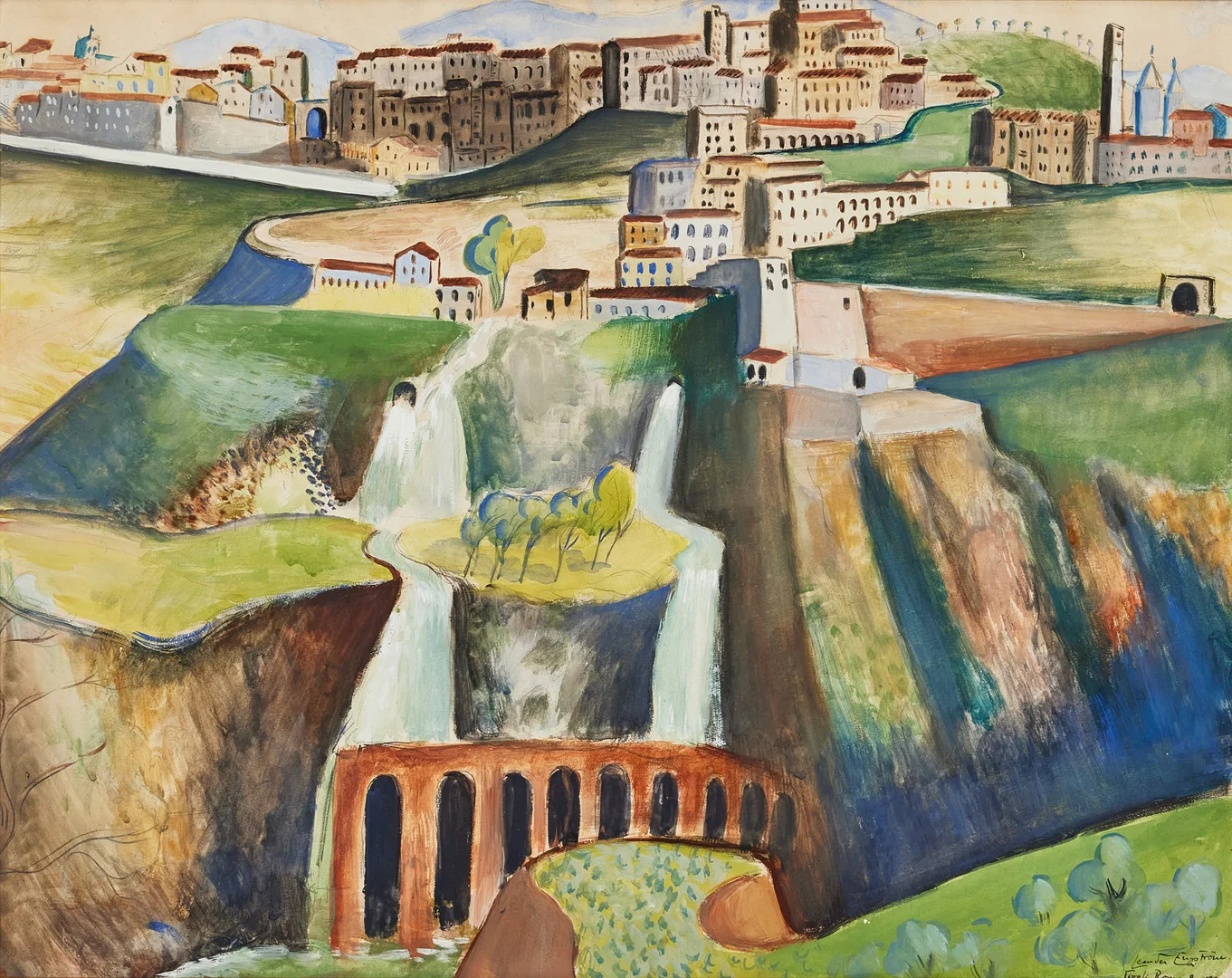
LEANDER ENGSTRÖM. Tivoli, Rome.
Leander Engström
·
Klubbat pris
Leander Engström
·
20 bud
Skick
Not examined out of frame. For further information and condition report, please contact victoria.svederberg@auktionsverket.se.
Utläst automatiskt ur husets skickbeskrivning.
Gouache on paper, 54 x 69 cm, including frame 75 x 90 cm. Signed and dated Leander Engström Tivoli Roma, 9/4 1920. In March 1920, Leander Engström travelled south together with a group of Swedish artists and art critics, including Einar Jolin, Ragnar Hoppe and Gregor Paulsson. They travelled via London and Paris before reaching Italy, where Engström came above all to immerse himself in Florence and the Tuscan landscape. The encounter with Renaissance masters — such as Giotto, Simone Martini, Piero della Francesca and Paolo Uccello — made a strong impression on Engström. He also studied Etruscan art, and the Italian light and color splendor of the landscape became a transformative experience. During his stay, his painting style changed significantly. From earlier, more Nordic restrained color scales, he shifted to a warmer, more intense palette and a clearer, more classical form world. Tuscany with its hills, cypresses and villages became a new motivational and emotional center in his works. This current motif was painted early during his journey, where the cooler color scales remain alive. The painting depicts the spectacular waterfalls outside Tivoli, located northeast of the capital Rome. Engström depicts the scenic cascade of waterfalls along the Aniene River, which flows through the Sabine Mountains. In the foreground is the dramatic fall in which the water plunges down the valley, accompanied by the arched ancient viaduct. In the background rises the city with its densely built houses and medieval silhouettes. The composition is characterized by a clear will of form and intensity of color, where Engström captures both the play of light and the drama of the landscape. The motif balances between the topographically recognizable and the artistically visionary — a poetic interpretation of the Italian journey that became a crucial stage in Engström's development towards a more harmonious and classical design language.